
free case consultation
free case consultation
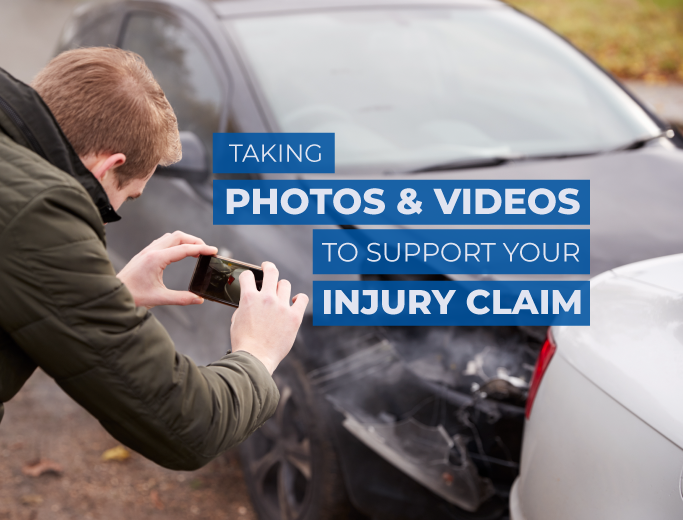
As the saying goes, “a picture is worth a thousand words”. This is especially true for personal injury claims. Photos and videos of the aftermath of a car wreck capture critical evidence, and they often prove to be incredibly valuable to personal injury cases. In the chaos following a collision, taking photos and videos may not be at the top of your mind; however, this documentation is incredibly important when proving fault and demonstrating the extent of your injuries. Below we discuss the most important items you or any passengers injured in the crash should document following a car crash, as well as tips for ensuring the photos and videos you take are as effective as possible in supporting your injury claim.
After checking yourself and others for serious injury, begin capturing photos and videos of the scene. If you’re hurt and unable to take photos or videos, try to find a witness who can. Make sure you take a variety of images, including:
Focus on showing the whole picture, such as where the wreck occurred, the time of day, weather, traffic signs, or any other significant factors that may have contributed to the accident. If there are signs of negligence, such as a vehicle defect or a hazard in the road, take photos and videos of this as well. This documentation will provide critical context about how and why the accident occurred.
Begin documenting your injuries as soon as possible following a wreck. This includes:
It is important to also understand that not all injuries are visible. Traumatic brain injuries, whiplash, and neck and back injuries may not be as easy to document in photos and videos as a broken bone would be. That’s where diagnoses and regular treatment with a healthcare provider can assist with getting your injuries documented and contained in medical records (x-rays, CT scans, etc.). All of these elements combined can help you and your legal team establish a timeline with verifiable proof about how the accident has impacted you.
While property damage doesn’t always tell the full story of a personal injury claim, documenting any damage to your vehicle is still a necessary step following a collision.
You don’t need to be a professional photographer or videographer to document your personal injury claim – typically, a cell phone is all you need. However, blurry, dark, or unclear photos or videos won’t do much to strengthen your case. To get the best evidence possible:
Phones have lots of storage these days, and having more photos and videos of your wreck is better than having too few. If you’re unsure if a photo or video contains helpful information about the collision, our team is highly skilled at analyzing documentation from accident scenes. We can review your pictures or footage and determine if they can be used to strengthen your case.
If you’ve been hurt due to someone else’s negligence, documenting to incident can prove valuable when filing a personal injury claim. However, collecting photos and videos on your own may be challenging. Our car accident lawyers have the experience and can work alongside you to gather evidence so that you can focus on the healing process. We have team members who can visit the accident scene, take photos and videos of damage, obtain medical records, and more. Get Hughes & Coleman and Get It Done – call us today at 800-800-4600 for a free case evaluation.

If you or a loved one has been seriously injured, please fill out the form below for your free consultation or call us at 800-800-4600.

 (615)-255-9100
  Chat Now
  Call Us