
free case consultation
free case consultation
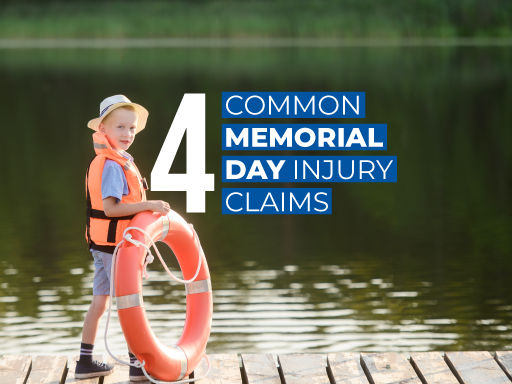
As the unofficial start to summer, Memorial Day provides families an opportunity to gather and enjoy everything the season has to offer. However, as with most major U.S. holidays, Memorial Day sees a higher-than-average rate of injury. Just last year, Tennessee saw two deaths and 25 Boating Under the Influence (BUI) citations over Memorial Day weekend alone. The harm or wrongful death of a loved one is something no one wants to consider; however, given the inherent risks of popular Memorial Day activities, a serious injury cannot be ruled out. Pool injuries, boating injuries, ATV injuries, burn injuries, and more are all too common over this U.S. holiday. Help keep everyone safe by learning more about common personal injury claims associated with Memorial Day weekend and how to prevent them.
Spending the weekend poolside with loved ones and friends to celebrate the return of warm weather is an ideal way to spend Memorial Day. However, keeping visitors safe should always be at the top of every pool owner’s mind. Swimming pool owners in Kentucky and Tennessee have a duty to maintain and keep their pools safe. This includes taking preventative measures to ensure children, even those who aren’t invited onto the property, are not put into harm’s way. Both Kentucky and Tennessee have what is known as an Attractive Nuisance doctrine, which dictates that property owners can be held responsible for any injuries that occur due to something a child would find difficult to resist. Pools, construction equipment, or other dangerous conditions that might draw the attention of a child are included under the Attractive Nuisance doctrine. If someone is harmed in your pool due to something preventable, you may be found liable for any injuries caused and could open yourself up to a premises liability lawsuit.
Similar to pool owners, boat owners and operators can be held responsible for passengers who are harmed as a result of their negligence. For example, if the owner of the boat is operating their craft under the influence of drugs or alcohol and causes an accident, the negligent operator can be held liable for damages. For each person onboard a vessel, federal law, as well as Kentucky law and Tennessee law, requires a Type I, II, or III personal flotation device (PFD) on all boats. If the owner of the boat fails to follow state or federal safety regulations relating to floatation devices, or if they fail to ensure their passengers follow those laws, they can be held responsible for any resulting injuries.
Hitting the trails on an ATV is a favorite Memorial Day activity for many. While all-terrain vehicles are undoubtedly useful for work and fun for recreation, ATVs can also cause catastrophic injuries. Due to their speed, the lack of safety features, and the tendency most riders have to forgo a helmet, an ATV accident can be deadly and result in overwhelming hospital bills. If you own an ATV and operate it in a way that harms someone else, you can be held responsible for their injuries. Additionally, property owners who allow others to operate an ATV on their land and fail to keep their trails safe for visitors can also be liable for damages.
When done safely, an evening by a campfire is a perfect way to kick off the summer. However, a fire that isn’t contained can cause serious burn injuries. If you have a bonfire on your property that causes harm to a visitor, you may find yourself liable for any injuries they sustain.
Our personal injury team sees all the different ways people can be harmed, and we want to do everything within our power to prevent an injury before it can happen. However, if you’re hurt due to someone else’s negligence this Memorial Day weekend – or any other day – we’re here to help. Our team has been helping injured people and their families get the compensation they deserve for over 35 years. If you’re hurt, get Hughes & Coleman and get it done – call 800-800-4600 for a free consultation.

If you or a loved one has been seriously injured, please fill out the form below for your free consultation or call us at 800-800-4600.

 (615)-255-9100
  Chat Now
  Call Us