
free case consultation
free case consultation
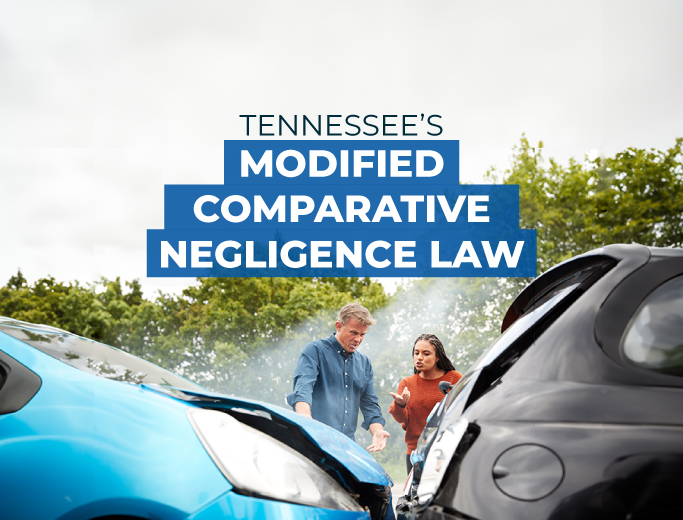
Negligence laws differ from state to state, and in Tennessee, they directly influence how personal injury claims are handled. When someone is injured in an accident, whether involving a vehicle, hazardous property, or another party’s carelessness, determining who is legally responsible becomes a critical part of the recovery process. Tennessee follows a system known as modified comparative negligence, which plays a major role in how fault is assigned and how damages are awarded.
Under this legal approach, an injured person may still recover compensation even if they share part of the blame for the accident. However, their financial recovery will be reduced in proportion to their level of fault. For instance, a person found to be 25 percent responsible for an incident would have their compensation reduced by that same amount.
For anyone pursuing a personal injury claim in Tennessee, Hughes & Coleman Injury Lawyers offers trusted guidance and expert legal experience to help protect your rights and secure the compensation you deserve. Contact a Nashville personal injury lawyer for legal guidance.
Simply put, negligent actions are those that breach a duty of care and cause harm to someone else. If a driver collides with another vehicle because he’s texting and driving, that driver may be found negligent. If a landlord fails to fix a hazardous stairway and someone falls, he may be sued for negligence and be liable for damages (hospital bills, future medical care, lost wages, etc.).
In Tennessee, as well as several other states, the law determines fault using a modified comparative negligence system. The modified comparative negligence rule assesses how much each party contributed to an injury. This means that if the person who has been injured and brings the claim (the plaintiff) is found to be 50% or more at fault, they will not be able to obtain damages.
For example, imagine a scenario where an individual has just finished a night of celebration in downtown Nashville. Having a few too many drinks on Honky-Tonk Highway, he chooses to walk home and makes his way down Broadway. The intoxicated gentleman unknowingly enters an unmarked and open construction area where the sidewalk has been demolished. He slips and falls on the construction debris, breaking his ankle. A judge or jury may find that, while the construction company is 80% at fault for failing to adequately mark the construction zone or take measures to keep pedestrians safe, the injured party is 20% at fault for being publicly intoxicated. Even though the man was intoxicated and found to be partially at fault, under Tennessee’s modified comparative negligence rule, he can still obtain a portion of damages. Since he was found to be 20% at fault, he is only able to obtain compensation for 80% of the damages he’s suffered. An experienced Nashville personal injury lawyer would aim to reduce the amount of fault assigned to the victim in this case.
Now, imagine our intoxicated individual stumbles upon the same Broadway construction site, but this time, the area is visibly marked as a construction zone. Signs are in place warning against entry, and there are fences and barriers up to prevent pedestrians from entering the area. However, the intoxicated man walking home doesn’t want to take the long way around the construction. He climbs over the barriers, ignores the signage indicating the area is unsafe, and breaks his ankle on the construction debris. In this case, a judge or jury could determine the construction company is only 20% at fault, while the man is 80% at fault for intentionally ignoring the safety measures in place. Since the intoxicated man was found to be more than 50% at fault for his own injury, he would not be able to recover anything for damages.
When you’ve been injured and make a claim for compensation, the insurance company will likely begin building a case against you. Insurance companies are businesses with bottom lines, and they will often do everything in their power to avoid paying the money you deserve. The 50% threshold for the modified comparative negligence rule allows some flexibility for those who may have played a part in their injury. However, if you’re found to be more than 50% at fault, it could be the difference between obtaining the compensation you need to survive and receiving nothing.
The bottom line is yes, Tennessee follows the doctrine of comparative negligence in personal injury cases. Though, in Tennessee, specifically, the state follows a modified comparative negligence system. This means that if a person is found to be partially at fault for their own injuries, their damages are reduced by their percentage of fault. However, if a person is found to be 50% or more at fault for the accident, they are barred from recovering any damages.
Our Tennessee personal injury lawyers have years of experience fighting the insurance companies, and our Tennessee legal team is well-versed in making the modified comparative negligence rule work in your favor. We’ll fight to prove who was in the wrong and obtain the maximum results possible for your claim.
Contact us at 800-800-4600 for a free case evaluation.



If you or a loved one has been seriously injured, please fill out the form below for your free consultation or call us at 800-800-4600.

 (615)-255-9100
  Chat Now
  Call Us