-
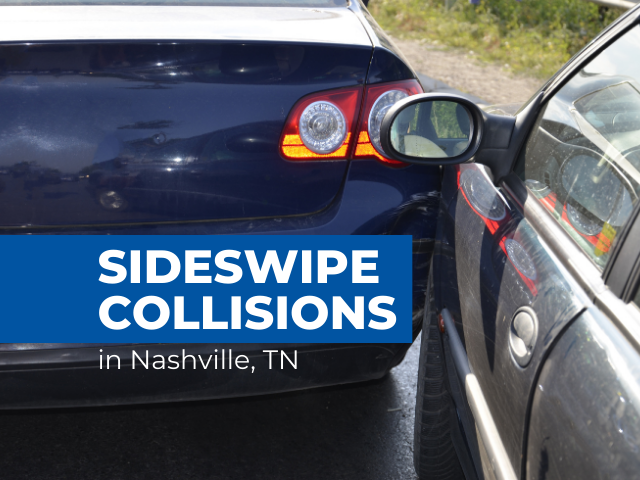

Being involved in a sideswipe car accident can be a traumatizing event, and when a collision occurs, it’s important to know the proper steps to take in order to receive the care you need, and to know what will be required to recover damages for any injuries you may have sustained.
If you’ve been injured due to someone else’s negligence, the Nashville car accident lawyers at Hughes & Coleman Injury Lawyers can help. We are available 24/7. Call our legal team today for a free consultation.
CALL NOW
800-800-4600
Get it done.
Steps to take after being sideswiped in Nashville
In this video, personal injury lawyer Lee Coleman discusses the most important steps to take following a sideswipe collision in Nashville. We’ll also talk through some of the ways a car accident lawyer can help so that you can focus on your health and recovery.
After being in a Nashville sideswipe accident, the following steps can put you in the best position possible for your health, and for your personal injury claim:
- Inspect yourself and passengers involved for injuries.
- Call 911 immediately, especially if you require medical attention. For non-emergency highway incidents, call 847 (THP) on any cell phone. A police officer will likely come to the scene, but if they do not, you will need to report the crash yourself by filling out and mailing a Nashville police report within 20 days of the accident. If a passenger was injured in the crash, they can also obtain a copy of the report as an involved party.
- Get medical attention as soon as possible. Medical treatment is essential to your recovery, and will also serve to document your injuries for the insurance company. Personal injury lawyers will use this documentation as evidence in your claim.
- Ensure you are safe from oncoming traffic. If you can move your vehicle to the side of the road, do so safely. This not only protects you from further injuries, but also helps protect other motorists who may need to avoid the crash.
- Photograph the scene in a way that shows what happened. Taking pictures will help you remember details about the crash and serve as evidence to document the accident. This evidence can help support your personal injury case if you’ve been hurt and seek compensation. Take photos or video evidence of vehicle damage, injuries, and the scene.
- Take notes about the accident, including the location, date and time of the accident, and the direction each vehicle was traveling. If you were the victim of a hit-and-run, note any details about the car that hit you such as their license plate or any other identifiable items on the vehicle.
- Exchange information with the other driver, including driver’s license, insurance information, address, phone, email, and vehicle information, including the make, model, and license plate number. You should also ask for the vehicle identification number (VIN), which is located on the dashboard on the driver’s side of the vehicle.
- Gather contact information from witnesses, including their name, email, and phone, if possible.
- Do not admit fault to the other driver, police, or your insurance company. Your car accident attorney will help determine fault through the proper channels and processes.
- Contact an experienced Nashville car accident attorney as soon as possible.
Nashville car accident lawyers can help you after being sideswiped
If you’ve been injured in a sideswipe accident, an experienced personal injury lawyer, such as Hughes & Coleman, can help you recover compensation for:
- Property damage
- Medical bills
- Lost wages (including future lost wages)
- Pain and suffering
Car accident victims should contact an attorney as soon as possible following a wreck. Our legal team is here for you at 800-800-4600, day and night.
What are sideswipe car accidents?
Sideswipe accidents are a type of car accident in which the sides of two vehicles collide with each other while traveling in the same or opposite directions. There are two types of sideswipe collisions that our Nashville personal injury lawyers often handle:
Sideswipe in the same direction
A same-direction sideswipe accident occurs when two vehicles traveling in the same direction make contact with each other on their sides. This typically happens when one vehicle attempts a lane change and inadvertently swipes the side of another vehicle in the process.
For example, if a driver in the right lane of a highway attempts to change into the left lane without checking their blind spot and hits the side of a vehicle already in the left lane, this would be considered a same-direction sideswipe accident.
Blind spot accidents can occur in various types of wrecks involving passenger vehicles, motorcycles, and commercial trucks. Commercial trucks, in particular, are prone to such accidents due to their larger blind spots, also known as “no-zones”.
Sideswipe in the opposite direction
An opposite-direction sideswipe car accident occurs when two vehicles traveling in opposite directions make contact with each other on their sides. This type of accident can occur when one of the vehicles drifts into the opposite lane of traffic, such as when a driver falls asleep at the wheel or loses control of their vehicle.
Opposite-direction sideswipe accidents can be dangerous and have the potential to cause severe injuries or fatalities. The force of the impact can cause the vehicles to lose control, veer off the road, or collide with other vehicles or objects. In some cases, these accidents can also result in head-on collisions, which are among the most serious types of wrecks, and can often result in serious injury.
Sideswipe auto accident statistics in Nashville
According to Nashville car accident data, there were 2,136 sideswipe collisions in Nashville in 2022. Most sideswipe accidents in Nashville occur when vehicles are traveling in the same direction, though there are instances where sideswipes happen when cars are traveling in the opposite direction.
When compared to other types of Nashville car crashes in 2022, sideswipe collisions account for 21% of the most common car accidents, which makes them the third most common behind rear end collisions and angle collisions.
Where do sideswipe accidents most commonly happen in Nashville?
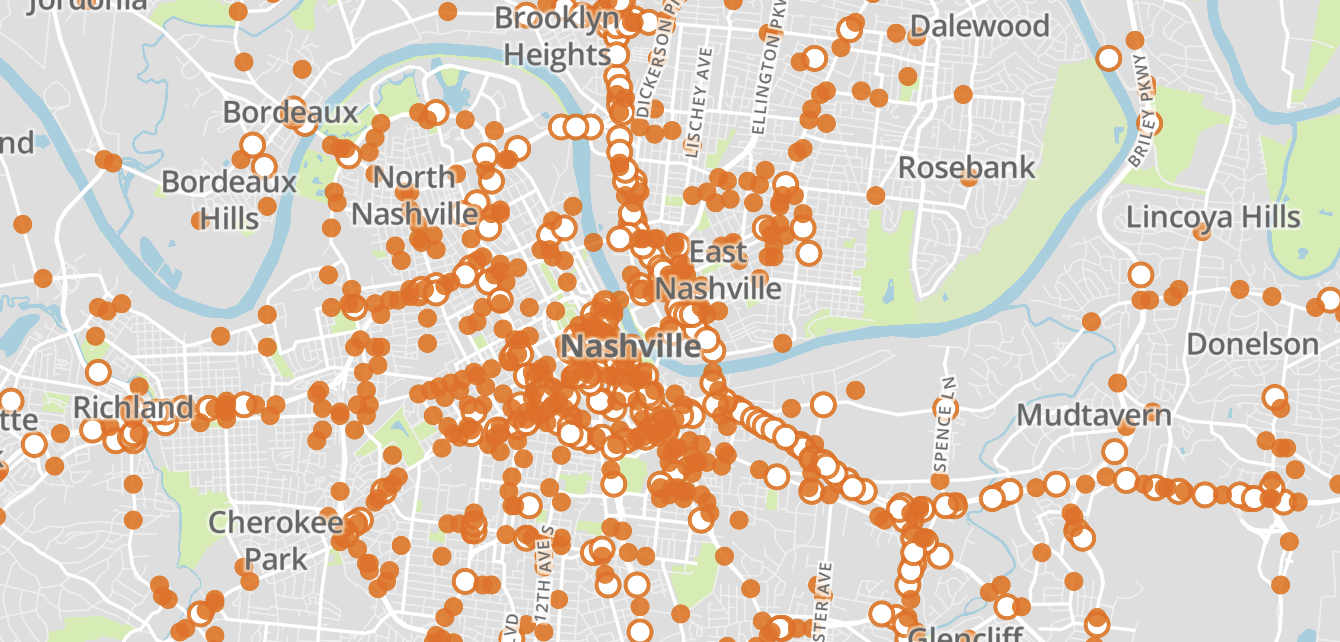

A sideswipe accident can happen anywhere in and around Nashville, however, as Nashville crash data supports, there are some areas of the city and surrounding areas where sideswipe collisions occur more frequently. These areas include:
- Tennessee Interstates 24, 65 and 40
- Downtown Nashville
- East Nashville
- North Nashville
- Brooklyn Heights
In Nashville, as in many other cities, sideswipe accidents are more likely to occur on multi-lane roads or highways, particularly during rush hour traffic when drivers are more likely to change lanes frequently, or where lanes merge. Additionally, construction zones, areas with narrow lanes, and areas with poor visibility can also increase the likelihood of sideswipe accidents.
Do I need to file a report if it was a minor car accident?
After an accident in Tennessee, you are required to submit your report to the Department of Safety and Homeland Security within 20 days if the wreck meets any of the following criteria:
- You were involved in an automobile crash as an owner or driver involving death or injury.
- Damage to property was in excess of one thousand five hundred dollars ($1,500) to any person involved.
- If an accident results in damage to state or local government property in excess of four hundred dollars ($400).
Common injuries following sideswipe collisions
Injuries from sideswipe collisions can range, which is why it is important to seek medical attention as soon as you can following a crash. Some common injuries from sideswipe accidents include:
- Whiplash
- Neck and back injuries
- Traumatic Brain Injuries (TBIs)
- Concussions
- Broken bones
- Soft tissue injuries
How to tell who swiped who in the crash
Determining who swiped who in a sideswipe accident can be difficult and may require an investigation by the police, insurance adjusters, and an experienced car accident lawyer. This investigation is especially important when the wreck involves a personal injury claim because the outcome of the investigation will place fault, or a percentage of fault, on one or both drivers involved. Here are some factors that can help determine who is at fault:
Physical evidence: Scratches or paint transfer left on the vehicles can help determine the direction of impact and which vehicle hit the other.
Witness statements: Eyewitnesses who saw the accident occur may be able to provide valuable information about which vehicle was at fault.
Vehicle position and movement: The position of the vehicles after the accident and their movement prior to the impact can help determine which vehicle made the improper or unsafe maneuver. Skid marks can also prove helpful when evaluating fault.
Traffic camera footage: If the accident occurred in an area with traffic cameras, footage of the accident can help determine who is at fault.
Police report: If the police are called to the scene of the accident, they will typically document the details of the accident in a report, which can include statements from drivers, witnesses, and any physical evidence.
Ultimately, the determination of fault in a sideswipe accident will depend on the specific circumstances of the accident, and it is important to work with an experienced car accident law firm who has the resources to independently investigate the car crash on your behalf. This is especially important in Nashville, as Tennessee law includes the “50 percent bar rule”. This means that if a driver is 50 percent or more at-fault, they will be unable to recover any compensation for their damages.
At Hughes & Coleman, we have a team who routinely works to ensure that contributing factors are thoroughly investigated to support personal injury cases for our clients.
Call Hughes & Coleman today and get it done
If you’ve been injured in a sideswipe collision in Nashville, our team is here to take your call. We always offer free consultations and are here for you 24/7. Hire local Nashville personal injury lawyers who will help you get every dollar you deserve.
Call us today at 800-800-4600.
Get it done.
Get In Touch Today!
We offer free consultations 24/7 and there will always be someone here to take your call. Call our personal injury lawyers today for a free consultation or fill out this form and we will contact you.
We serve clients across Tennessee and Kentucky and we have several offices throughout both states. See all of our locations and contact us today.